Shiny new games. In an idealistic world I would have nothing but them. Whether it be those ones sealed in that see-through plastic packaging or the ones that sit snug in limited edition paraphernalia. However it is a much fancied world that I do not live in.
Student debt is racking up and penniless pockets makes game choosing an arduous process outside of the birthday and Christmas periods. There is no room (or game vouchers) for experimentation and due to my money shortcomings, I am limited to the one and only title my lifestyle enables me to afford.
Therefore the time has come to resort to second hand gaming. The snob’s nightmare and a connoisseur dream, the titles sit lonely and ashamed in the “Bargain Bins” of supermarkets or are being sold out the back of a Peugeot at a car-boot sale. You question their legality, you debate their quality but when you come across that “dream title” wherever it maybe it’s clear the biggest asset of second hand gaming is their price.
If you are willing to wait out the hype and initial aftermath of the post-release syndrome of a major title then it is your gain. The street retail price becomes irrelevant and the walks of life it took for that game to get there is superfluous as the price stares glaringly at you.
Fifa for a fiver? The most noticeable price drops are in the titles that are released on an annual basis. So as the year 201x comes along with a sports title from Electronic Arts, you can be certain that, whatever sport it be football, rugby, nfl, the 201(x-1 year) title is going to get a lot cheaper. This can be good as it means you can get really decent titles at a snip of their initial selling prices.
A dated outcast turns to a potential new playmate for you at the local game retailer. The appeals of second hand gaming are there for gamers to experience and with other titles like Mass Effect and Dead Space on offer, there are some true gems that can certainly be worth the wait.
Friday, 16 April 2010

Saturday, 27 March 2010
The Sex Pixels
The genre of a game can be determined by what’s on the front of the box. If its got a gun then it’s a shooter, if it’s got magic then it’s an RPG or if its got guns and magic then, logically, it’s an RPG shooter. It is not this mechanism however that makes any standard game unique or even provide a basis on how good it is. The critical component that contributes to a game’s cosmetic makeup is the topics it deals with.
The topics are most important in plot-driven games where moral debates are created out of what can be done. Recently in Modern Warefare 2, the player could pose as a terrorist in an airport and set his crosshairs on gunning down innocent passengers. Violence is clearly one topic that has been addressed and spurned great outrage and most recently from former celebrity gardener Alan Titchmarsh. The other is sex.

Perhaps the most “representative” of this topic is the Grand Theft Auto series. Since it has undergone its 3D facelift, the games have become some of the darkest and maturest on the market. Aside from the overwhelming violence in Vice City/San Andreas/Liberty City, hookers are another delight to our games anti-hero. Nipples on show, sex manouveures fully demonstrated, it is a game that has caused great controversy in the past.
One of its most bearing moments was the uncovering of “Hot Coffee” a program that was initially uncovered on the PC version of San An but then found on the PS2 and Xbox versions. Why so controversial? Well the relationship factor of any GTA games is, particularly, intensified in this one where your lady asks you in for some coffee. Innocent enough. However when I said coffee I mean fourth base.

Sex is a contentious issue. GTA has managed to gain a loyal amount of negative press from politicians, feminists, parents, the Government, religious figureheads, and lest we forget gardeners too. The stress seems to be on the glorification of it whilst there is no educational values on show. Perhaps if the game were supplemented by a guide entitled “how to have yourself a proper relationship” would people keep a blind eye to some of the actions available in the game.
This article reads though as GTA is the only game to delve into the sexploits of video game capabilities. Adult games were found on 4 bit consoles like the Atari 2600 20 years ago (e.g. Custer’s Revenge), whilst the Leisure Suit Larry PC Gmaes of the 90’s demonstrates the remarkable longevity of such a hushed topic in video gaming. However with 4 bit graphics or even 2D visuals of a computer, it was hard for sex to not to have an inescapable comedic/jovial element. But as games get more realistic, the more criticism it garners.

Whether that be as a blatant cash cow like in Dead or Alive: Volleyball or the lesbians of God Of War 2, if there is anything such as a “shock” topic still in video games then it is sex. An ingredient that would make it into the frontpage headlines of a newspaper or the central theme in a politicians keynote speech. There is no escaping it and much like the violence debate it is one that has many people divided.
The topics are most important in plot-driven games where moral debates are created out of what can be done. Recently in Modern Warefare 2, the player could pose as a terrorist in an airport and set his crosshairs on gunning down innocent passengers. Violence is clearly one topic that has been addressed and spurned great outrage and most recently from former celebrity gardener Alan Titchmarsh. The other is sex.
Perhaps the most “representative” of this topic is the Grand Theft Auto series. Since it has undergone its 3D facelift, the games have become some of the darkest and maturest on the market. Aside from the overwhelming violence in Vice City/San Andreas/Liberty City, hookers are another delight to our games anti-hero. Nipples on show, sex manouveures fully demonstrated, it is a game that has caused great controversy in the past.
One of its most bearing moments was the uncovering of “Hot Coffee” a program that was initially uncovered on the PC version of San An but then found on the PS2 and Xbox versions. Why so controversial? Well the relationship factor of any GTA games is, particularly, intensified in this one where your lady asks you in for some coffee. Innocent enough. However when I said coffee I mean fourth base.
Sex is a contentious issue. GTA has managed to gain a loyal amount of negative press from politicians, feminists, parents, the Government, religious figureheads, and lest we forget gardeners too. The stress seems to be on the glorification of it whilst there is no educational values on show. Perhaps if the game were supplemented by a guide entitled “how to have yourself a proper relationship” would people keep a blind eye to some of the actions available in the game.
This article reads though as GTA is the only game to delve into the sexploits of video game capabilities. Adult games were found on 4 bit consoles like the Atari 2600 20 years ago (e.g. Custer’s Revenge), whilst the Leisure Suit Larry PC Gmaes of the 90’s demonstrates the remarkable longevity of such a hushed topic in video gaming. However with 4 bit graphics or even 2D visuals of a computer, it was hard for sex to not to have an inescapable comedic/jovial element. But as games get more realistic, the more criticism it garners.
Whether that be as a blatant cash cow like in Dead or Alive: Volleyball or the lesbians of God Of War 2, if there is anything such as a “shock” topic still in video games then it is sex. An ingredient that would make it into the frontpage headlines of a newspaper or the central theme in a politicians keynote speech. There is no escaping it and much like the violence debate it is one that has many people divided.
Wednesday, 24 March 2010
Pokemon: An Introduction To Video Games, TV Shows and Cards
It was a craze. It was a fashion. It was mass hysteria in the mid 90’s. Parents didn’t get it but their kids absolutely loved it. Movies, cards, video games, tv shows, it was everywhere in my mind. Children payed it on the way to school, in the playground and then under the bedcovers at night. It was carrying the baton that the tamogutchi left off and marked a significant fascination of Western popular culture into the Japanese equivalent.
Of course I’m talking about Pokemon. But I’m not just casually throwing this word around to describe the 493 creatures that now exist in some fictional wilderness on some kid’s DS cartridge. I’m talking about the original 150. Squirtle, Bulbasaur, Charmander, that’s how it was when our first incarnation of ourselves on Blue and Red would travel across a region in order to become pokemon champion of the world (!!!).

It was a class game and after going a succession of added generations (or three) of unique pokemon to the games we arrived at the latest non-ported versions on the DS - Diamond and Pearl. However some felt the new, shiny creatures sugarcoated over the need for refinements in gameplay. Despite the innovations of the DS, our beloved trainer can still only moves 4 directions even in the latest ports. It is a feature that is clearly dated but familiar to loyalists who would suggest the peak of the series came with the introduction of Gold and Silver.
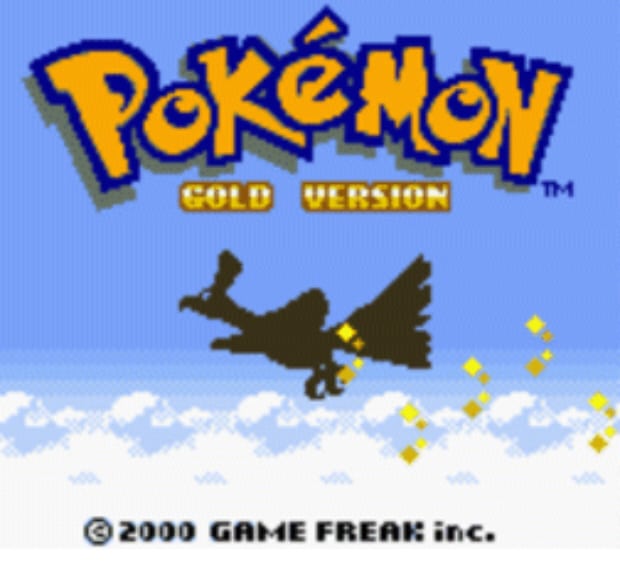
250 was just right and the addition of berries, running shoes, varieties of pokeballs, a cellphone, radio made it one of the best games on the Gameboy Colour. The RPG and strategy element had been retained from Blue and Red and 16 badges spread over 2 regions meant it had a massive quest in-store for a wannabee champion-to-be. The latest incarnations of these games on the DS has made me realize that they can claim to be the most complete Pokemon games.
But it wasn’t just about video games. Pokemon was much, much more. The cards functioned much like top-trumps to the extent that Ditto’s transform attack would be very appropriate. The number in a pack was dependant on how much you paid and those illusive shinies created the addictiveness factor of the product. However to describe them as “second rate top-trumps” neglects the fact that Pokemon cards are still taken very, very seriously. They can be used at the highest level in Nintendo endorsed competitions but for the devotees they were, depending on what card, collector’s item.
Many tales have been told over the availability of some of the world’s rarest cards. There is no one universally-agreed answer as price evaluation can be very subjective. The most illusive of the first generation of cards? For me perhaps a shiny Moltres but for Ebay a dark Dragonite has an asking price of £127.50. But this is just loose change for completists who seek the ultra-scarce. Whether that be the “illustrator card” of which only 6 were issued or the “prerelease raichu” dubbed the “Holygrail of Pokemon Cards” by the PokeGym curators. The asking price of these cards you ask? Well depending on factors such as quality, they can fetch anything from $1000 to $10000.

The games and the cards are still very much still the facial recognition features of what Pokemon has come to be. The movies now are very much straight-to-tv affairs whilst the tv series is again restricted to kids channels like Cartoon Network. No more is it just Ash, Brok and Misty on their adventures. Familiar faces shoved aside to make way for new characters and the expansion of the franchise is, again, on its way. But as this furthering continues the essence of what Pokemon was, when it was at its peak, is soon going to be lost.
Of course I’m talking about Pokemon. But I’m not just casually throwing this word around to describe the 493 creatures that now exist in some fictional wilderness on some kid’s DS cartridge. I’m talking about the original 150. Squirtle, Bulbasaur, Charmander, that’s how it was when our first incarnation of ourselves on Blue and Red would travel across a region in order to become pokemon champion of the world (!!!).
It was a class game and after going a succession of added generations (or three) of unique pokemon to the games we arrived at the latest non-ported versions on the DS - Diamond and Pearl. However some felt the new, shiny creatures sugarcoated over the need for refinements in gameplay. Despite the innovations of the DS, our beloved trainer can still only moves 4 directions even in the latest ports. It is a feature that is clearly dated but familiar to loyalists who would suggest the peak of the series came with the introduction of Gold and Silver.
250 was just right and the addition of berries, running shoes, varieties of pokeballs, a cellphone, radio made it one of the best games on the Gameboy Colour. The RPG and strategy element had been retained from Blue and Red and 16 badges spread over 2 regions meant it had a massive quest in-store for a wannabee champion-to-be. The latest incarnations of these games on the DS has made me realize that they can claim to be the most complete Pokemon games.
But it wasn’t just about video games. Pokemon was much, much more. The cards functioned much like top-trumps to the extent that Ditto’s transform attack would be very appropriate. The number in a pack was dependant on how much you paid and those illusive shinies created the addictiveness factor of the product. However to describe them as “second rate top-trumps” neglects the fact that Pokemon cards are still taken very, very seriously. They can be used at the highest level in Nintendo endorsed competitions but for the devotees they were, depending on what card, collector’s item.
Many tales have been told over the availability of some of the world’s rarest cards. There is no one universally-agreed answer as price evaluation can be very subjective. The most illusive of the first generation of cards? For me perhaps a shiny Moltres but for Ebay a dark Dragonite has an asking price of £127.50. But this is just loose change for completists who seek the ultra-scarce. Whether that be the “illustrator card” of which only 6 were issued or the “prerelease raichu” dubbed the “Holygrail of Pokemon Cards” by the PokeGym curators. The asking price of these cards you ask? Well depending on factors such as quality, they can fetch anything from $1000 to $10000.
The games and the cards are still very much still the facial recognition features of what Pokemon has come to be. The movies now are very much straight-to-tv affairs whilst the tv series is again restricted to kids channels like Cartoon Network. No more is it just Ash, Brok and Misty on their adventures. Familiar faces shoved aside to make way for new characters and the expansion of the franchise is, again, on its way. But as this furthering continues the essence of what Pokemon was, when it was at its peak, is soon going to be lost.
Monday, 15 March 2010
The Gamecube Complex
Nintendo have been at it forever. Their first home console was released 16 years ago and have since built an inventory that keeps the wheels of innovation moving in the console market. The release of Microsoft’s Project Natal and the Playstation Move in the coming months are 4 years too late and shows the competitors are being left to play catch-up. Whether these add-ons will the rival the Wii is questionable but it marks the Wii as a significant improvement on Nintendo’s last hiccup - no not the Virtual Boy but the Gamecube.


By the time the European release of “Project Dolphin” came round in May 2002, Nintendo had already tightened its grip on the handheld market with the Gameboy series but its secure position in the home consoles family was coming under threat. This had been initiated several years previous by the unfashionable entrance of the cartridge based N64. That complemented by the moving-in of the hip-cool newcomer, the Playstation, which continued to carry out its day job of selling 3 Sony’s for every 1 Nintendo.
The reason for this was down to a variety of factors. The unwanted game development costs along with their lack of internal memory lead many third party developers, like Square Enix (who originally had Final Fantasy 7 penciled in for the N), to shift focus on output for the Playstation. Promised dreams of online capability (remember the 64DD?) quickly became fruitless fairytales for Nintendo loyalists in America and Europe. Despite the faster loading times, the “pulling power” of Mario and Link, its innovative add-ons (Transfer, Expansion and Rumble Paks) Nintendo’s role in the family was soon to be outcast.

Sony had overtaken them and after the acquisition of Sega by Microsoft, another developer was looking to emerge and leapfrog over Nintendo much like Sony had just done in the mid to late 90’s. Whilst Microsoft were ambitious with the original Xbox with an original selling price of $400 and aesthetics that had many likening it as “a toaster”, it certainly did raise an eyebrow or two.
Nevertheless it was a more than satisfactory welcoming for Microsoft that proved a successful experimentation and dabble into the console market. It left the Gamecube to fight for scraps at the dinner table in the hope of garnering more attention than it deserved. Mario, Celda, Metroid, the big names were out but don’t be deceived by the orange illuminated smile that greeted you when you turned it on. Everything was not as rosy at Nintendo headquarters.

The lack of third party support left the ‘cube with a band of under 14 followers thanks to a lack of really mature games (Eternal Darkness and Residential Evil 4 aside). Nevertheless on retrospect, the console has aged well. If viewed as a transitional phase towards Nintendo’s crowning the moment, the launch of the Wii, the Gamecube had all the innovations its competitors lacked. Connectivity to the GBA, microphone and wireless controllers all proved to be stepping stones in the blueprints that resulted in Nintendo emerging from the shadows of its competitors.

By the time the European release of “Project Dolphin” came round in May 2002, Nintendo had already tightened its grip on the handheld market with the Gameboy series but its secure position in the home consoles family was coming under threat. This had been initiated several years previous by the unfashionable entrance of the cartridge based N64. That complemented by the moving-in of the hip-cool newcomer, the Playstation, which continued to carry out its day job of selling 3 Sony’s for every 1 Nintendo.
The reason for this was down to a variety of factors. The unwanted game development costs along with their lack of internal memory lead many third party developers, like Square Enix (who originally had Final Fantasy 7 penciled in for the N), to shift focus on output for the Playstation. Promised dreams of online capability (remember the 64DD?) quickly became fruitless fairytales for Nintendo loyalists in America and Europe. Despite the faster loading times, the “pulling power” of Mario and Link, its innovative add-ons (Transfer, Expansion and Rumble Paks) Nintendo’s role in the family was soon to be outcast.

Sony had overtaken them and after the acquisition of Sega by Microsoft, another developer was looking to emerge and leapfrog over Nintendo much like Sony had just done in the mid to late 90’s. Whilst Microsoft were ambitious with the original Xbox with an original selling price of $400 and aesthetics that had many likening it as “a toaster”, it certainly did raise an eyebrow or two.
Nevertheless it was a more than satisfactory welcoming for Microsoft that proved a successful experimentation and dabble into the console market. It left the Gamecube to fight for scraps at the dinner table in the hope of garnering more attention than it deserved. Mario, Celda, Metroid, the big names were out but don’t be deceived by the orange illuminated smile that greeted you when you turned it on. Everything was not as rosy at Nintendo headquarters.

The lack of third party support left the ‘cube with a band of under 14 followers thanks to a lack of really mature games (Eternal Darkness and Residential Evil 4 aside). Nevertheless on retrospect, the console has aged well. If viewed as a transitional phase towards Nintendo’s crowning the moment, the launch of the Wii, the Gamecube had all the innovations its competitors lacked. Connectivity to the GBA, microphone and wireless controllers all proved to be stepping stones in the blueprints that resulted in Nintendo emerging from the shadows of its competitors.
Thursday, 4 March 2010
A word of warning ....
the articles I have just put up are of eld value. They are from the crazy years that was institutionally known as 6th form. I like to think my writing style has come on A LOT (and I mean a lot) since then!
The Sun vs. Mars Bar Boxing Match!?!? [written 2007] [what was I on???]
As supermarkets take centre stage for battles between Pepsi and Coke, Carlsberg and Heineken, McDonalds's and Burger King it begs to ask the question what other businesses are fighting for the sum of money you usually find in your trouser pocket?
In a world where virtually any company can compete against everyone, the Mars Bar and The Sun are having a rivalry across all available frontiers. Though we have not (yet) come to an age where you can eat and read a newspaper, both are ancient in existence and with the same price tag they are eternally battling for the Queen's nose. Indeed at 50p they are surely worth every penny for whatever it is they offer - pleasure, humor, satisfaction, sodium bicarbonate?
The Mars Bar at a towering figure of 17cm swaggers into the ring in a hefty but chocolaty costume of 17 grams, 5 ounces. Engulfed by its adolescent audience, the Mars strikes an expressionless pose to the photographers whilst its competitor waits edgily on canvas. The Sun - guarded by its army of supplements and pull-outs - waits tentatively ready to do battle.
The tabloid edges popularity in the U.K. with 3.3 million copies sold daily whilst the Mars finds itself universally admired with an $18 billion empire across 65 countries. Undoubtedly the Mars has spent much of that money on aiding its brothers and sisters - Mars Snack Size, Mars Delight, Mars Duo whilst The Sun has also spawned a number of siblings in Sun Bingo and SunSingles. In fact this match could have easily been a tag team affair but with one contestant per team there will be no interference tonight.
No doubt both corners are riding on the outcome of the contest; with the Mars going in as the slight favorite. Certainly with the capacity to cure temporary hunger, the alleged ability to "keep the doctor away" and a layer of caramel the Mars has emerged the popular choice. Nevertheless in a bold move this week, The Sun has come out this by publishing its adversary's weaknesses.
The Mars Bar, as The Sun points out, is known for its "bad health, bad dieting and poor stamina". Having a considerable amount of acne the chocolate is hardly a pin-up either, and with reporter's suggesting disfiguration if the temperature rises above 40°C the Mars could already be looking down for the count. Along with rumors of carrying meat extract, the pre-match drugs test for the Mars could be a celebration in itself for its contingent.
In fact where the Mars Bar is already filled with partially hydrated soybean oil, The Sun looks to distract its opponents. Known for the one-two combination of Soduku and Mystic Meg the tabloid aims to fluster its adversary. The tabloid able to inform, humor and persuade its opponent into submission will only want to avoid the inevitable barrage of beverages (and criticism) from the spectators.
As the fight begins, it's clear the match is more than endurance rather a test of mental strength. The Sun starts intimidating its opponent by forecasting tomorrow's front page edition - "Mars Munches Defeat". Instinctively the chocolate bar attempts to land the first punch of the match; but the tabloid almost immediately expecting it goes on a counter-offence. Rapping around its opponent like a boa constrictor The Sun has quite literally tightened his grip upon the match. The Mars is looking down for the count as it stands immobile; anxiously waiting for the bell.
This match could be over in a matter of moments - The Mars not the most flexible of competitors unlike perhaps bubble game or candy floss - is trying to squirm its way out but The Sun is having none of it. Thirty seconds left, and it looks as if the sell by date on this Mars Bar is about to run out. And there it is! The Mars has fallen! The Mars has fallen! The fickle figure falls whilst The Sun returns to its true A4 layout and waits for the ref to count to ten. The ref counts, the tabloid taunts and the audience shocked - eight...nine...ten and he has done it!
Acting on impulse the ref makes his way to collect and carry the crown The Sun has clearly been longing for - the 50 pence piece. He knows that with this unanimous, undisputed and unsurpassable victory, that the tabloid has earned at least some respectability.
The Trouble Of Talent-searching TV [written 2008]
"For the last time it is pronounce couple not cuple" There are many things wrong with Saturday night T.V., one is the B.B.C. employing regional accents to boost viewer ratings and the other is I.T.V. for giving false-hope to anyone who thinks they can sing.
Last night Strictly Come Dancing and The X Factor finally ended, with certified B-lister Alesha Dixon and miserable Scot Leon Jackson taking the crowns. Both are now, set to serve life sentences of daytime T.V. interviews, re-union shows and in time be part of Never Mind The Buzzcock's "Identity Parade" round.
The two shows ability to spit out (and regurgitate) flagging celebrities back into stardom is quite alarming. More concerning is that these two "talent" shows are now the flagship of reality television. However where The X Factor prides itself upon contestants from families who probably have businesses in the Yellow Pages; Strictly is more class conscious.
This series contestants have been born in the near-Southern counties of Kent, (Kelly Brook), Hertfordshire (Letitia Dean), Suffolk (Brian Chapman). Quintessentially this makes Strictly appeal to the middle class, to people who pay for T.V. licenses, who stay in on Saturday nights. These people won't be at the pub watching Rugby League on Sky Sports but sipping wine in the vicinity of their detached suburban houses. Though there is this evidence of "class consciousness" from the BBC there is always an objection to every rule. In this case it is the humble upbringings of co-presenter Tess Daly from Stockport, North-West England.
Subjects such as Mrs. Vernon Kay conform, as always, to the Beeb's over-used recipe for success. Accents - check, Modified Received Pronunciation - check, ethnic minorities - check, as well as every other grey-area of modern society are all force-fed to the audience. Even the dancers diversify the international void inexistent in the "famed" British celebrities. The females particularly, with surnames such as Kopylova and Cacace, bare skin as if there British passports depended on it.
Even early round contestants of The X Factor all too frequently strip themselves to a naked body of dignity: and thankfully nothing else. When the show reaches its 12 finalists, the judges are all too eager to toot their own horn. Bias never validates public opinion, even if it has been subject to scrutiny because of phone-in scandals in this post-Richard and Judy era. Though this could be beneficial when the Eurovision comes around, at the moment it is de-valuing the term "winner".
The fact that these shows are over-exposed too worries me. What are the B.B.C. doing with taxpayer's money? Strictly ... It Takes Two has a mid-week daily slot whilst The Xtra Factor broadcasts straight after the live show. Though they provide hype and exposure, these "complementary" shows are just surely to fill out presenter's employment contracts.
So whilst the two talent shows are either finding the crème of the British public or of that of flagging celebrities fame status, they are further creating stereotypes of reality t.v., and more worryingly British Culture. Do we really want to see over-weight, tattooed, females on prime-time terrestrial television? Probably yes, but deep down you know it can't be good for foreigners' perceptions of the British.
Subscribe to:
Posts (Atom)
