The auditions are coming to a close in the latest series of Britain's Got Talent but this hasn't stopped the general public thinking they have got what it takes to perform in front of the Queen. This week's auditions took place in Manchester and Birmingham and with a flu-stricken Simon Cowell, Louie Walsh was once again called in to headline the judges panel.
The show, being televised on an unfamiliar Sunday night to make way for the Champions League final, was back to showing what variety acts were hoping to garner the applause from the crowd as well as the accolades from the judges. Amongst the "talented" individuals on last night's show were cross dressing Beyonce dancers, diploma boasting piano players and lonely clarinet fifty somethings desperate to navigate their way through the audition stages.
One of these was choir boy, Liam McNally, who struck a chord with the audience and the judges with his rendition of "O Danny Boy". Piers Morgan described him as a "serious contender" and this was backed by the bookies with Paddy Power making the 14 year old second favorite to win the show at odds of 5/1 behind dance troupe Spellbound.
Brummie bouncer, Neil Fullard, was also a big hit with the judges by crooning Frank Sinatra's "Come Fly With Me" with the support of his colleagues in the background alongside Ant and Dec. The 42 year old will hope that he has done enough to get through to the semi final stage along with another 39 hopefuls when they are announced on next week's show.
After then the judges and the public will have a much better idea of who will follow in the footsteps of Paul Potts, George Sampson and Diversity and perform in front of Her Majesty.
Monday, 24 May 2010

Thursday, 20 May 2010
Iron Man 2 Review
Tony Stark was made for film and Tony Stark was made for Robert Downey Jr. His role in the first film ends with the immortal line "I am Ironman" and the entire premise of Iron Man 2 follows. This entails Stark's alter ego crossing flight paths with Lieutenant Colenel James Rhodes (Don Cheadle), providing a competitive business for Justin Hammer (Sam Rockwell) and having epic duels with lead villain Mickey Rourke as Ivan Vanko. Add the returning Gwyneth Paltrow, newly appointed assistant Scarlett Johansson and SHIELD's own Samuel L Jackson, director Jon Favreau is ambitious in covering so many possibilities in a two hour film. All this to an AC/DC soundtrack.
Now summing up the plot like this makes many wonder whether Iron Man 2 falls into the same trap Spiderman 3 fell into. The approximately 500 million villains, the compulsory love-interest as well as the main character exploring his dark side proved too much for the Spiderman fellowship to bare. The relinquishing of great power and great responsibility by both director Sam Raimi and actor Toby Maguire has resulted in the need for a new lead in a planned but possibly premature reboot. The comic book movie industry is one of the most demanding genres in terms of output. With an already contracted threequel in the works as well as a role for Tony Starks in the Avengers film in 2012. A poor show was not an option.
Consequently Iron Man 2 plays like it's predecessor just on a bigger budget (not that you could tell the difference mind). This means the action sequences are even more spectacular, noteworthy and original on a big screen. One instance in Monte Carlo demonstrates Stark's swagger of James Bond proportions from in the bar schmoozing with the ladies (he goes as far as ordering a martini!) to high octane racing with the big boys in a fetching overall. What ensues can only be aptly described perhaps as Favreau's opinion on how to make Formula 1 more interesting.
Although action is very much on the agenda for most of the film, make no mistake Iron Man 2 is also casually funny. Mostly thanks to Downey Jr's charm, it is also down to director Favreau himself who plays Stark Enterprises chief bodyguard. The term "bodyguard" is used loosely though as Favreau provides sparring partner, portable baggage handler and comic sidekick throughout the film. With attributes like those one could consider him a triple threat on screen but his talents from the chair is what probably pays the bills.
It's clear when watching that everyone involved had a great time in making it. The absence of Terrence Howard, who was reportedly, on the biggest contract of the main cast (!) in the original as well as Favreau's alleged dislike in his portrayal of Rhodes led to his replacement, Don Cheadle, getting the role in the sequel. Nevertheless the film's spotlight firmly shines on Downey Jr. who can check superhero sequel off his "to do" list. One wonders if the series will catch 3D fever because watching Iron Man 2 you couldn't help but be intrigued and excited to see the results.
Now summing up the plot like this makes many wonder whether Iron Man 2 falls into the same trap Spiderman 3 fell into. The approximately 500 million villains, the compulsory love-interest as well as the main character exploring his dark side proved too much for the Spiderman fellowship to bare. The relinquishing of great power and great responsibility by both director Sam Raimi and actor Toby Maguire has resulted in the need for a new lead in a planned but possibly premature reboot. The comic book movie industry is one of the most demanding genres in terms of output. With an already contracted threequel in the works as well as a role for Tony Starks in the Avengers film in 2012. A poor show was not an option.
Consequently Iron Man 2 plays like it's predecessor just on a bigger budget (not that you could tell the difference mind). This means the action sequences are even more spectacular, noteworthy and original on a big screen. One instance in Monte Carlo demonstrates Stark's swagger of James Bond proportions from in the bar schmoozing with the ladies (he goes as far as ordering a martini!) to high octane racing with the big boys in a fetching overall. What ensues can only be aptly described perhaps as Favreau's opinion on how to make Formula 1 more interesting.
Although action is very much on the agenda for most of the film, make no mistake Iron Man 2 is also casually funny. Mostly thanks to Downey Jr's charm, it is also down to director Favreau himself who plays Stark Enterprises chief bodyguard. The term "bodyguard" is used loosely though as Favreau provides sparring partner, portable baggage handler and comic sidekick throughout the film. With attributes like those one could consider him a triple threat on screen but his talents from the chair is what probably pays the bills.
It's clear when watching that everyone involved had a great time in making it. The absence of Terrence Howard, who was reportedly, on the biggest contract of the main cast (!) in the original as well as Favreau's alleged dislike in his portrayal of Rhodes led to his replacement, Don Cheadle, getting the role in the sequel. Nevertheless the film's spotlight firmly shines on Downey Jr. who can check superhero sequel off his "to do" list. One wonders if the series will catch 3D fever because watching Iron Man 2 you couldn't help but be intrigued and excited to see the results.
Friday, 16 April 2010
Second Hand Gaming - the future of gaming?
Shiny new games. In an idealistic world I would have nothing but them. Whether it be those ones sealed in that see-through plastic packaging or the ones that sit snug in limited edition paraphernalia. However it is a much fancied world that I do not live in.
Student debt is racking up and penniless pockets makes game choosing an arduous process outside of the birthday and Christmas periods. There is no room (or game vouchers) for experimentation and due to my money shortcomings, I am limited to the one and only title my lifestyle enables me to afford.
Therefore the time has come to resort to second hand gaming. The snob’s nightmare and a connoisseur dream, the titles sit lonely and ashamed in the “Bargain Bins” of supermarkets or are being sold out the back of a Peugeot at a car-boot sale. You question their legality, you debate their quality but when you come across that “dream title” wherever it maybe it’s clear the biggest asset of second hand gaming is their price.
If you are willing to wait out the hype and initial aftermath of the post-release syndrome of a major title then it is your gain. The street retail price becomes irrelevant and the walks of life it took for that game to get there is superfluous as the price stares glaringly at you.
Fifa for a fiver? The most noticeable price drops are in the titles that are released on an annual basis. So as the year 201x comes along with a sports title from Electronic Arts, you can be certain that, whatever sport it be football, rugby, nfl, the 201(x-1 year) title is going to get a lot cheaper. This can be good as it means you can get really decent titles at a snip of their initial selling prices.
A dated outcast turns to a potential new playmate for you at the local game retailer. The appeals of second hand gaming are there for gamers to experience and with other titles like Mass Effect and Dead Space on offer, there are some true gems that can certainly be worth the wait.
Student debt is racking up and penniless pockets makes game choosing an arduous process outside of the birthday and Christmas periods. There is no room (or game vouchers) for experimentation and due to my money shortcomings, I am limited to the one and only title my lifestyle enables me to afford.
Therefore the time has come to resort to second hand gaming. The snob’s nightmare and a connoisseur dream, the titles sit lonely and ashamed in the “Bargain Bins” of supermarkets or are being sold out the back of a Peugeot at a car-boot sale. You question their legality, you debate their quality but when you come across that “dream title” wherever it maybe it’s clear the biggest asset of second hand gaming is their price.
If you are willing to wait out the hype and initial aftermath of the post-release syndrome of a major title then it is your gain. The street retail price becomes irrelevant and the walks of life it took for that game to get there is superfluous as the price stares glaringly at you.
Fifa for a fiver? The most noticeable price drops are in the titles that are released on an annual basis. So as the year 201x comes along with a sports title from Electronic Arts, you can be certain that, whatever sport it be football, rugby, nfl, the 201(x-1 year) title is going to get a lot cheaper. This can be good as it means you can get really decent titles at a snip of their initial selling prices.
A dated outcast turns to a potential new playmate for you at the local game retailer. The appeals of second hand gaming are there for gamers to experience and with other titles like Mass Effect and Dead Space on offer, there are some true gems that can certainly be worth the wait.
Saturday, 27 March 2010
The Sex Pixels
The genre of a game can be determined by what’s on the front of the box. If its got a gun then it’s a shooter, if it’s got magic then it’s an RPG or if its got guns and magic then, logically, it’s an RPG shooter. It is not this mechanism however that makes any standard game unique or even provide a basis on how good it is. The critical component that contributes to a game’s cosmetic makeup is the topics it deals with.
The topics are most important in plot-driven games where moral debates are created out of what can be done. Recently in Modern Warefare 2, the player could pose as a terrorist in an airport and set his crosshairs on gunning down innocent passengers. Violence is clearly one topic that has been addressed and spurned great outrage and most recently from former celebrity gardener Alan Titchmarsh. The other is sex.

Perhaps the most “representative” of this topic is the Grand Theft Auto series. Since it has undergone its 3D facelift, the games have become some of the darkest and maturest on the market. Aside from the overwhelming violence in Vice City/San Andreas/Liberty City, hookers are another delight to our games anti-hero. Nipples on show, sex manouveures fully demonstrated, it is a game that has caused great controversy in the past.
One of its most bearing moments was the uncovering of “Hot Coffee” a program that was initially uncovered on the PC version of San An but then found on the PS2 and Xbox versions. Why so controversial? Well the relationship factor of any GTA games is, particularly, intensified in this one where your lady asks you in for some coffee. Innocent enough. However when I said coffee I mean fourth base.

Sex is a contentious issue. GTA has managed to gain a loyal amount of negative press from politicians, feminists, parents, the Government, religious figureheads, and lest we forget gardeners too. The stress seems to be on the glorification of it whilst there is no educational values on show. Perhaps if the game were supplemented by a guide entitled “how to have yourself a proper relationship” would people keep a blind eye to some of the actions available in the game.
This article reads though as GTA is the only game to delve into the sexploits of video game capabilities. Adult games were found on 4 bit consoles like the Atari 2600 20 years ago (e.g. Custer’s Revenge), whilst the Leisure Suit Larry PC Gmaes of the 90’s demonstrates the remarkable longevity of such a hushed topic in video gaming. However with 4 bit graphics or even 2D visuals of a computer, it was hard for sex to not to have an inescapable comedic/jovial element. But as games get more realistic, the more criticism it garners.

Whether that be as a blatant cash cow like in Dead or Alive: Volleyball or the lesbians of God Of War 2, if there is anything such as a “shock” topic still in video games then it is sex. An ingredient that would make it into the frontpage headlines of a newspaper or the central theme in a politicians keynote speech. There is no escaping it and much like the violence debate it is one that has many people divided.
The topics are most important in plot-driven games where moral debates are created out of what can be done. Recently in Modern Warefare 2, the player could pose as a terrorist in an airport and set his crosshairs on gunning down innocent passengers. Violence is clearly one topic that has been addressed and spurned great outrage and most recently from former celebrity gardener Alan Titchmarsh. The other is sex.
Perhaps the most “representative” of this topic is the Grand Theft Auto series. Since it has undergone its 3D facelift, the games have become some of the darkest and maturest on the market. Aside from the overwhelming violence in Vice City/San Andreas/Liberty City, hookers are another delight to our games anti-hero. Nipples on show, sex manouveures fully demonstrated, it is a game that has caused great controversy in the past.
One of its most bearing moments was the uncovering of “Hot Coffee” a program that was initially uncovered on the PC version of San An but then found on the PS2 and Xbox versions. Why so controversial? Well the relationship factor of any GTA games is, particularly, intensified in this one where your lady asks you in for some coffee. Innocent enough. However when I said coffee I mean fourth base.
Sex is a contentious issue. GTA has managed to gain a loyal amount of negative press from politicians, feminists, parents, the Government, religious figureheads, and lest we forget gardeners too. The stress seems to be on the glorification of it whilst there is no educational values on show. Perhaps if the game were supplemented by a guide entitled “how to have yourself a proper relationship” would people keep a blind eye to some of the actions available in the game.
This article reads though as GTA is the only game to delve into the sexploits of video game capabilities. Adult games were found on 4 bit consoles like the Atari 2600 20 years ago (e.g. Custer’s Revenge), whilst the Leisure Suit Larry PC Gmaes of the 90’s demonstrates the remarkable longevity of such a hushed topic in video gaming. However with 4 bit graphics or even 2D visuals of a computer, it was hard for sex to not to have an inescapable comedic/jovial element. But as games get more realistic, the more criticism it garners.
Whether that be as a blatant cash cow like in Dead or Alive: Volleyball or the lesbians of God Of War 2, if there is anything such as a “shock” topic still in video games then it is sex. An ingredient that would make it into the frontpage headlines of a newspaper or the central theme in a politicians keynote speech. There is no escaping it and much like the violence debate it is one that has many people divided.
Wednesday, 24 March 2010
Pokemon: An Introduction To Video Games, TV Shows and Cards
It was a craze. It was a fashion. It was mass hysteria in the mid 90’s. Parents didn’t get it but their kids absolutely loved it. Movies, cards, video games, tv shows, it was everywhere in my mind. Children payed it on the way to school, in the playground and then under the bedcovers at night. It was carrying the baton that the tamogutchi left off and marked a significant fascination of Western popular culture into the Japanese equivalent.
Of course I’m talking about Pokemon. But I’m not just casually throwing this word around to describe the 493 creatures that now exist in some fictional wilderness on some kid’s DS cartridge. I’m talking about the original 150. Squirtle, Bulbasaur, Charmander, that’s how it was when our first incarnation of ourselves on Blue and Red would travel across a region in order to become pokemon champion of the world (!!!).

It was a class game and after going a succession of added generations (or three) of unique pokemon to the games we arrived at the latest non-ported versions on the DS - Diamond and Pearl. However some felt the new, shiny creatures sugarcoated over the need for refinements in gameplay. Despite the innovations of the DS, our beloved trainer can still only moves 4 directions even in the latest ports. It is a feature that is clearly dated but familiar to loyalists who would suggest the peak of the series came with the introduction of Gold and Silver.
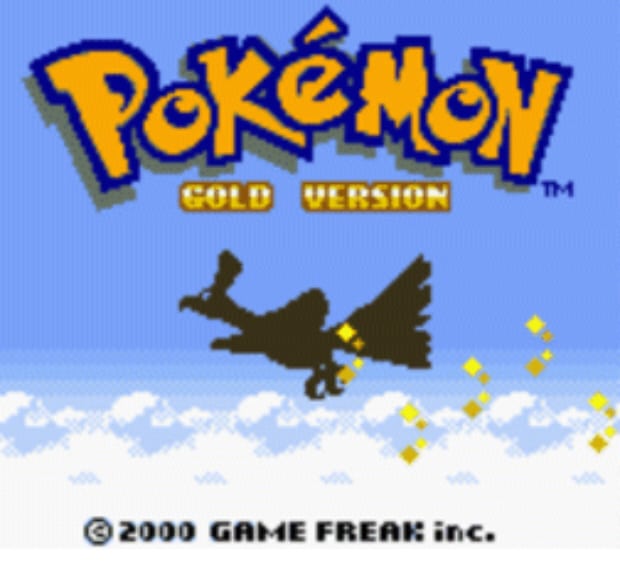
250 was just right and the addition of berries, running shoes, varieties of pokeballs, a cellphone, radio made it one of the best games on the Gameboy Colour. The RPG and strategy element had been retained from Blue and Red and 16 badges spread over 2 regions meant it had a massive quest in-store for a wannabee champion-to-be. The latest incarnations of these games on the DS has made me realize that they can claim to be the most complete Pokemon games.
But it wasn’t just about video games. Pokemon was much, much more. The cards functioned much like top-trumps to the extent that Ditto’s transform attack would be very appropriate. The number in a pack was dependant on how much you paid and those illusive shinies created the addictiveness factor of the product. However to describe them as “second rate top-trumps” neglects the fact that Pokemon cards are still taken very, very seriously. They can be used at the highest level in Nintendo endorsed competitions but for the devotees they were, depending on what card, collector’s item.
Many tales have been told over the availability of some of the world’s rarest cards. There is no one universally-agreed answer as price evaluation can be very subjective. The most illusive of the first generation of cards? For me perhaps a shiny Moltres but for Ebay a dark Dragonite has an asking price of £127.50. But this is just loose change for completists who seek the ultra-scarce. Whether that be the “illustrator card” of which only 6 were issued or the “prerelease raichu” dubbed the “Holygrail of Pokemon Cards” by the PokeGym curators. The asking price of these cards you ask? Well depending on factors such as quality, they can fetch anything from $1000 to $10000.

The games and the cards are still very much still the facial recognition features of what Pokemon has come to be. The movies now are very much straight-to-tv affairs whilst the tv series is again restricted to kids channels like Cartoon Network. No more is it just Ash, Brok and Misty on their adventures. Familiar faces shoved aside to make way for new characters and the expansion of the franchise is, again, on its way. But as this furthering continues the essence of what Pokemon was, when it was at its peak, is soon going to be lost.
Of course I’m talking about Pokemon. But I’m not just casually throwing this word around to describe the 493 creatures that now exist in some fictional wilderness on some kid’s DS cartridge. I’m talking about the original 150. Squirtle, Bulbasaur, Charmander, that’s how it was when our first incarnation of ourselves on Blue and Red would travel across a region in order to become pokemon champion of the world (!!!).
It was a class game and after going a succession of added generations (or three) of unique pokemon to the games we arrived at the latest non-ported versions on the DS - Diamond and Pearl. However some felt the new, shiny creatures sugarcoated over the need for refinements in gameplay. Despite the innovations of the DS, our beloved trainer can still only moves 4 directions even in the latest ports. It is a feature that is clearly dated but familiar to loyalists who would suggest the peak of the series came with the introduction of Gold and Silver.
250 was just right and the addition of berries, running shoes, varieties of pokeballs, a cellphone, radio made it one of the best games on the Gameboy Colour. The RPG and strategy element had been retained from Blue and Red and 16 badges spread over 2 regions meant it had a massive quest in-store for a wannabee champion-to-be. The latest incarnations of these games on the DS has made me realize that they can claim to be the most complete Pokemon games.
But it wasn’t just about video games. Pokemon was much, much more. The cards functioned much like top-trumps to the extent that Ditto’s transform attack would be very appropriate. The number in a pack was dependant on how much you paid and those illusive shinies created the addictiveness factor of the product. However to describe them as “second rate top-trumps” neglects the fact that Pokemon cards are still taken very, very seriously. They can be used at the highest level in Nintendo endorsed competitions but for the devotees they were, depending on what card, collector’s item.
Many tales have been told over the availability of some of the world’s rarest cards. There is no one universally-agreed answer as price evaluation can be very subjective. The most illusive of the first generation of cards? For me perhaps a shiny Moltres but for Ebay a dark Dragonite has an asking price of £127.50. But this is just loose change for completists who seek the ultra-scarce. Whether that be the “illustrator card” of which only 6 were issued or the “prerelease raichu” dubbed the “Holygrail of Pokemon Cards” by the PokeGym curators. The asking price of these cards you ask? Well depending on factors such as quality, they can fetch anything from $1000 to $10000.
The games and the cards are still very much still the facial recognition features of what Pokemon has come to be. The movies now are very much straight-to-tv affairs whilst the tv series is again restricted to kids channels like Cartoon Network. No more is it just Ash, Brok and Misty on their adventures. Familiar faces shoved aside to make way for new characters and the expansion of the franchise is, again, on its way. But as this furthering continues the essence of what Pokemon was, when it was at its peak, is soon going to be lost.
Monday, 15 March 2010
The Gamecube Complex
Nintendo have been at it forever. Their first home console was released 16 years ago and have since built an inventory that keeps the wheels of innovation moving in the console market. The release of Microsoft’s Project Natal and the Playstation Move in the coming months are 4 years too late and shows the competitors are being left to play catch-up. Whether these add-ons will the rival the Wii is questionable but it marks the Wii as a significant improvement on Nintendo’s last hiccup - no not the Virtual Boy but the Gamecube.


By the time the European release of “Project Dolphin” came round in May 2002, Nintendo had already tightened its grip on the handheld market with the Gameboy series but its secure position in the home consoles family was coming under threat. This had been initiated several years previous by the unfashionable entrance of the cartridge based N64. That complemented by the moving-in of the hip-cool newcomer, the Playstation, which continued to carry out its day job of selling 3 Sony’s for every 1 Nintendo.
The reason for this was down to a variety of factors. The unwanted game development costs along with their lack of internal memory lead many third party developers, like Square Enix (who originally had Final Fantasy 7 penciled in for the N), to shift focus on output for the Playstation. Promised dreams of online capability (remember the 64DD?) quickly became fruitless fairytales for Nintendo loyalists in America and Europe. Despite the faster loading times, the “pulling power” of Mario and Link, its innovative add-ons (Transfer, Expansion and Rumble Paks) Nintendo’s role in the family was soon to be outcast.

Sony had overtaken them and after the acquisition of Sega by Microsoft, another developer was looking to emerge and leapfrog over Nintendo much like Sony had just done in the mid to late 90’s. Whilst Microsoft were ambitious with the original Xbox with an original selling price of $400 and aesthetics that had many likening it as “a toaster”, it certainly did raise an eyebrow or two.
Nevertheless it was a more than satisfactory welcoming for Microsoft that proved a successful experimentation and dabble into the console market. It left the Gamecube to fight for scraps at the dinner table in the hope of garnering more attention than it deserved. Mario, Celda, Metroid, the big names were out but don’t be deceived by the orange illuminated smile that greeted you when you turned it on. Everything was not as rosy at Nintendo headquarters.

The lack of third party support left the ‘cube with a band of under 14 followers thanks to a lack of really mature games (Eternal Darkness and Residential Evil 4 aside). Nevertheless on retrospect, the console has aged well. If viewed as a transitional phase towards Nintendo’s crowning the moment, the launch of the Wii, the Gamecube had all the innovations its competitors lacked. Connectivity to the GBA, microphone and wireless controllers all proved to be stepping stones in the blueprints that resulted in Nintendo emerging from the shadows of its competitors.

By the time the European release of “Project Dolphin” came round in May 2002, Nintendo had already tightened its grip on the handheld market with the Gameboy series but its secure position in the home consoles family was coming under threat. This had been initiated several years previous by the unfashionable entrance of the cartridge based N64. That complemented by the moving-in of the hip-cool newcomer, the Playstation, which continued to carry out its day job of selling 3 Sony’s for every 1 Nintendo.
The reason for this was down to a variety of factors. The unwanted game development costs along with their lack of internal memory lead many third party developers, like Square Enix (who originally had Final Fantasy 7 penciled in for the N), to shift focus on output for the Playstation. Promised dreams of online capability (remember the 64DD?) quickly became fruitless fairytales for Nintendo loyalists in America and Europe. Despite the faster loading times, the “pulling power” of Mario and Link, its innovative add-ons (Transfer, Expansion and Rumble Paks) Nintendo’s role in the family was soon to be outcast.

Sony had overtaken them and after the acquisition of Sega by Microsoft, another developer was looking to emerge and leapfrog over Nintendo much like Sony had just done in the mid to late 90’s. Whilst Microsoft were ambitious with the original Xbox with an original selling price of $400 and aesthetics that had many likening it as “a toaster”, it certainly did raise an eyebrow or two.
Nevertheless it was a more than satisfactory welcoming for Microsoft that proved a successful experimentation and dabble into the console market. It left the Gamecube to fight for scraps at the dinner table in the hope of garnering more attention than it deserved. Mario, Celda, Metroid, the big names were out but don’t be deceived by the orange illuminated smile that greeted you when you turned it on. Everything was not as rosy at Nintendo headquarters.

The lack of third party support left the ‘cube with a band of under 14 followers thanks to a lack of really mature games (Eternal Darkness and Residential Evil 4 aside). Nevertheless on retrospect, the console has aged well. If viewed as a transitional phase towards Nintendo’s crowning the moment, the launch of the Wii, the Gamecube had all the innovations its competitors lacked. Connectivity to the GBA, microphone and wireless controllers all proved to be stepping stones in the blueprints that resulted in Nintendo emerging from the shadows of its competitors.
Thursday, 4 March 2010
A word of warning ....
the articles I have just put up are of eld value. They are from the crazy years that was institutionally known as 6th form. I like to think my writing style has come on A LOT (and I mean a lot) since then!
Subscribe to:
Posts (Atom)
